

Hi there, it’s Alex! 👋
Selecting a trading account to follow is a lot like hiring a business partner. You wouldn’t just look at their resume and hire them on the spot, right? You would want to check their references, see how they handle pressure, and make sure they are a good fit for your goals.
In Copy Trading, it’s easy to get blinded by big profit numbers. But the secret to long-term success isn't just finding who made the most money last week—it's finding the trader who can make money consistently without giving you a heart attack!
Below is my personal checklist. I use this exact process to filter through hundreds of accounts to find the "Hidden Gems." Let’s get started.
How to Pick the Best Copy Trading Accounts
The Ultimate Selection Guide
Selecting good accounts to follow is probably the most important skill to develop when doing Copy Trading. It is the ability to truly evaluate the risks involved while also considering the income opportunities.
What makes the account selection process tricky is that you will never find the perfect account. You have to take many factors into account and weigh the pros and cons to identify the best opportunities and compare the shortlisted accounts you can copy trades from.
Regarding Link-2-Success, there are many sources of information on linkable accounts, which will be discussed in more detail below. They are:
- The Link-2-Success list of accounts you can copy from
- The Link-2-Success 8-week risk analysis schedules
- The FXBlue account analysis service
Without overcomplicating the selection process, the main aim is to find a profitable account with manageable risk. Experienced traders can do this relatively quickly, as they will have developed personal criteria, whereas if you are new, you would need to work through the process more thoroughly.
Important Account Selection Skills

Phase 1: The Basics (The "Deal Breakers")
1. The "System Requirements" Check Before you look at profits, check if the account fits your setup. If it doesn't pass these two tests, walk away!
-
💰 Budget Check: Does the required capital match what you have available? (Don't force a $5,000 strategy into a $500 account).
-
🏦 Broker Check: Does your broker allow the same leverage and conditions? (Especially important for US vs. Non-US traders).
2. The "Recency" Test Once it fits your budget, look at the performance. Focus heavily on the last 8 weeks.
-
Why? A strategy that worked 3 years ago might be failing today. You want to know what is working now.
3. Once a good income has been determined, the rest of the process revolves around assessing the risk and steadiness of the income flow. This would involve looking at items like: Maximum drawdown experienced by the account over it’s live and in the last 8 weeks. Anything over 30% based on the suggested account size should be investigated further or discarded. Please note that the Max Drawdown percentage can be reduced by increasing the account size or decreasing the lot size, so it should not be an absolute disqualifier.
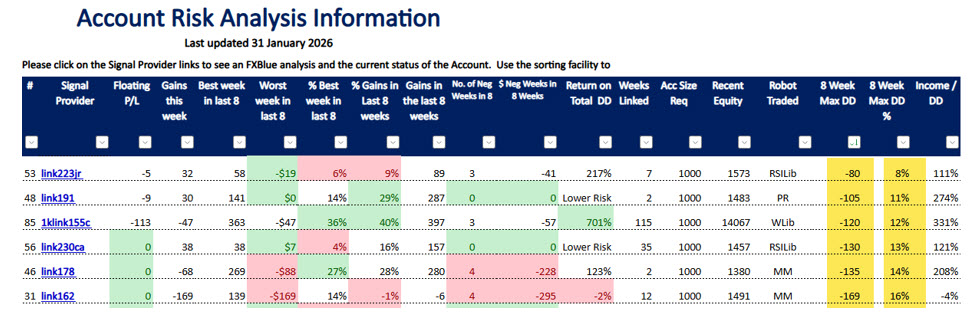
Phase 2: The Performance Check (The "Profit Potential")
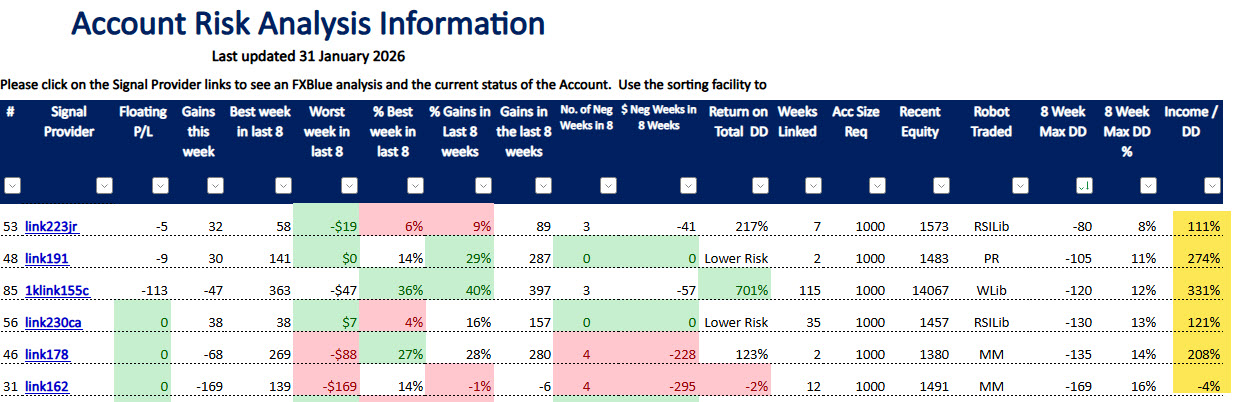
4. To help with the maximum drawdown evaluation, consider using the income to maximum drawdown ratio applied over the life of the account or the last 8 weeks. This ratio is your 'Bang for Buck' metric. It tells you if the risk you are taking is actually worth the reward. The Goal: You want high income with low drawdown. If an account risks 50% to make 5%, the math doesn't make sense.
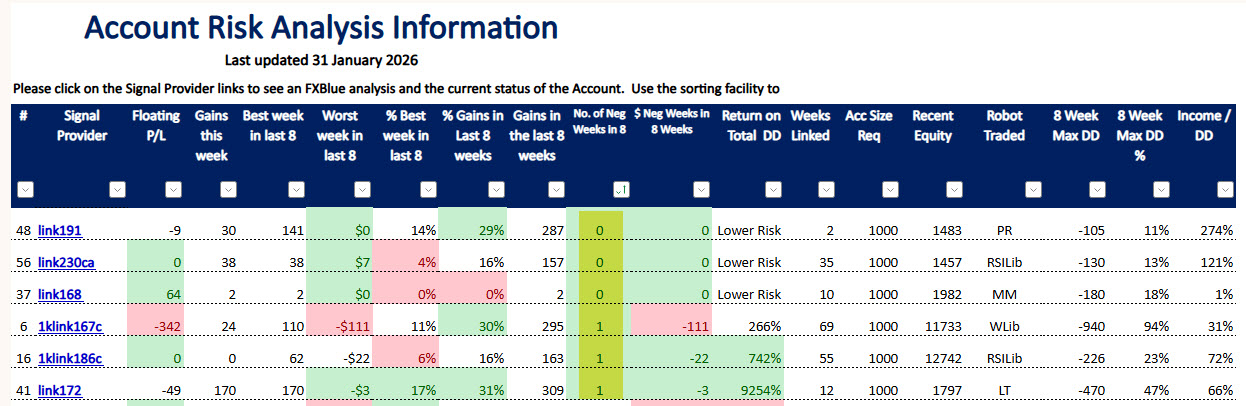
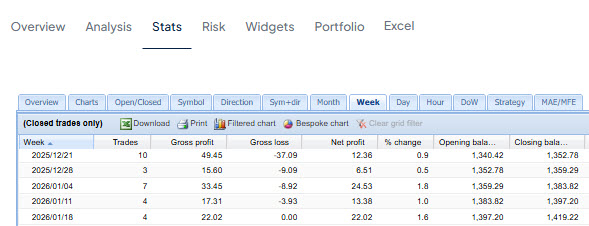
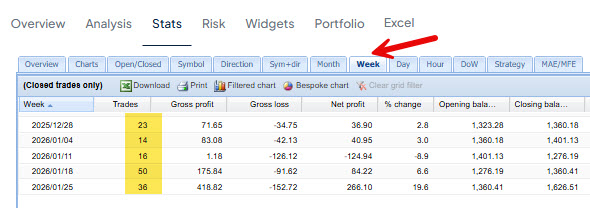
5. The next step is start looking at the steadiness and consistency of income. The number of negative weeks and their size are often good guides.
Phase 3: The Safety Inspection (The "Sleep-at-Night Factor")
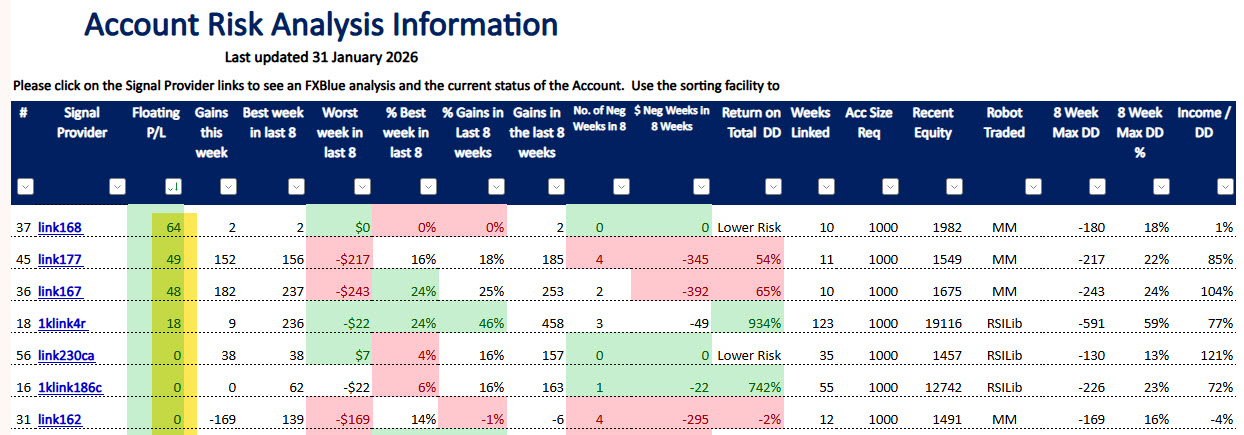
6.⚠️ The 'Sinking Ship' Rule Always check the Current Drawdown. If an account is currently sitting with a huge open loss (e.g., -40%), do not link to it right now. Imagine trying to hop onto a moving train that is currently dangling off a cliff edge. Wait for the trader to recover and stabilize before you join their journey."
7.This is my favourite secret weapon. 🕵️♂️ Don't just look at the final profit number—look at the journey it took to get there.
-
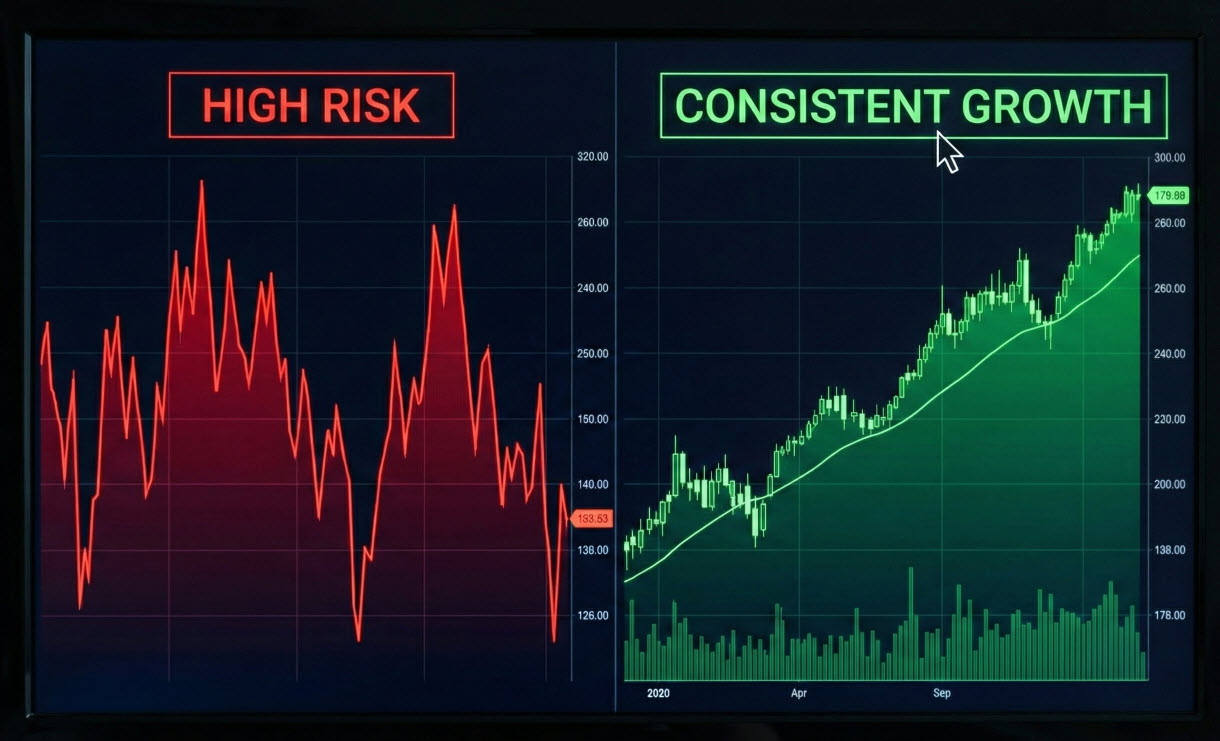
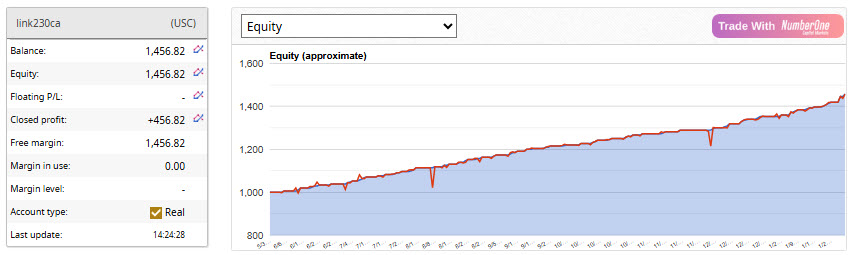
The Smooth Sailor (Chart A): A steady line going up 45 degrees. This trader manages risk well.
-
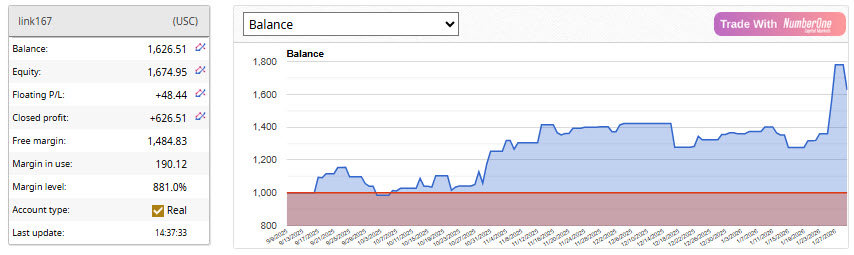
The Rollercoaster (Chart B): Huge spikes up and terrifying drops down. Sure, they made money eventually, but do you have the stomach for the ride?
Alex's Tip: I always pick the Smooth Sailor. I’d rather have slightly lower profits and zero stress than high profits and sleepless nights!"
Example of a smooth chart which shows less risk and a robust strategy
Example of an erratic chart which indicates higher and inconsistent risk
8. The next step is to look at the trading frequency. The more trades, the greater the risk of drawdowns.
Low Volume is often less risky and requires smaller accounts
High Volume can be riskier and may require larger accounts
9. Other factors to consider:
-
- The age of an account can show long-term survival through many trading conditions
- The currency trades – The JPY crosses can be very volatile and can add risk to trading
- The success rate is less of a factor if the account is successful. Most accounts have a 66% success rate
- The type of Robot traded – some robots are Profit Retrieval type of robots, and other trend following robots. The Profit Retrieval Robots can have large drawdowns in trending markets
- The type of broker account – live account (even if they are cent accounts), results are more dependable as it shows commitment, and demos often do not have overnight charges.
The above should provide you with a good approach to selecting sound accounts to copy trades from. Also, watch the occasional videos about the Link-2-Success for more ideas:
Here is the YouTube Playlist link (Better still become a subscriber): Link-2-Success Play List